


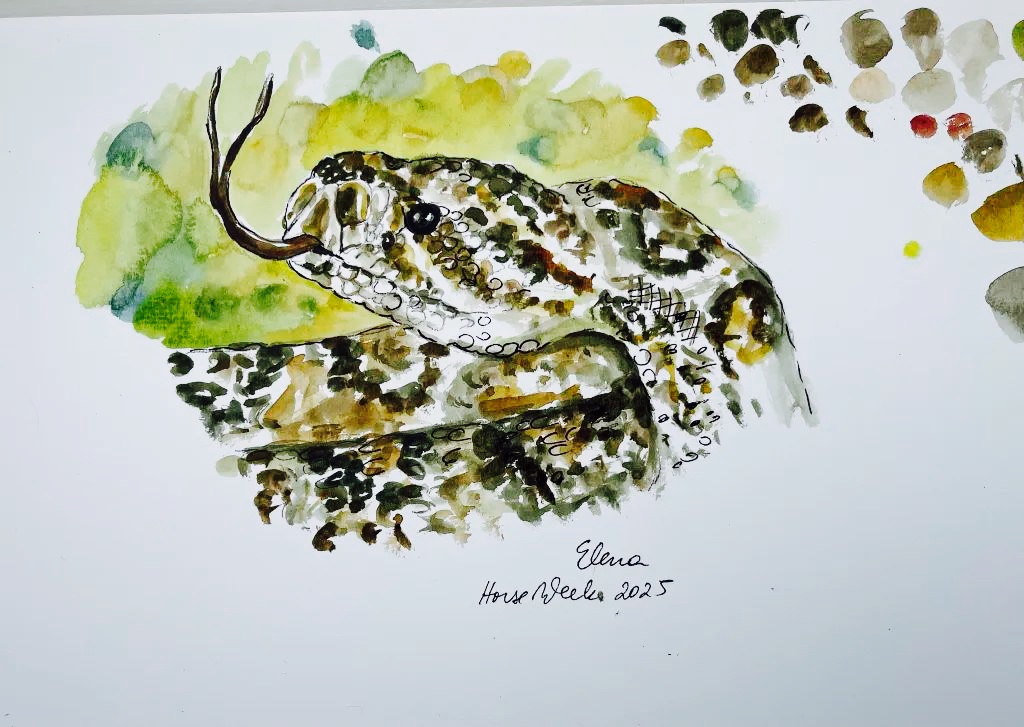

This is a story about rattlesnakes. Among other things. Bear with me.
Having named my historical Galveston novel Storms of Malhado, I get asked fairly often what exactly Malhado means. It’s a historical reference that seems to be more obscure than I’d bargained for, which is fine. Especially since the historical sources it goes back to are vague and shrouded in mystery, like Island fog.
Here’s what we know: In 1528 Spanish explorers shipwrecked on a barrier island off the coast of Texas. What awaited them there was pure danger. The island was full of rattlesnakes, there was an outbreak of the plague, and the native population practiced warfare cannibalism. Unsurprisingly, the Spanish explorers, who lived to tell, named this place Isla de Malhado. This translates to “the island of misfortune.”
What we don’t know is whether this island they came across was indeed Galveston, or perhaps another barrier island. But maybe it doesn’t fully matter, especially not when weaving a fictional story in which what’s important is the essence of things, the feelings they invoke, the atmosphere and the magic.
This is where I want to tell you about the rattlesnakes. Because Galveston did have them in its distant past, along with natives that practiced cannibalism, as well as outbreaks of the plague. While unfortunately the Karaankawas have disappeared without a trace, and luckily we no longer have to contend with the plague, we still have rattlesnakes galore. And that’s a good thing.
The concept of an Island of Misfortune is a romantic notion I obviously enjoy playing with. Because the story of the shipwrecked Spanish explorers who encountered cannibals, venomous snakes, and disease, can at first glance be misinterpreted. It can make one think that maybe the Island is cursed. But if you think about it a little deeper you realize that no, the Island is not cursed. The Island is protected. This does not mean, necessarily, that humans are safe here, especially when such humans are a threat. The Island protects itself fiercely against attempts to rob it of its wilderness and magic.
The rattlesnakes live in the dunes. I’ve never personally seen one, but I like knowing they’re there. I also love reminding people of it, especially when they ignore signs telling them that the dunes are protected wildlife habitat, a place where coyotes hide and sea turtles hatch, and that they should keep out. “Hey, ma’am, you know that’s where the rattlesnakes live,” I’ve shouted over the years to many a mother who thought it might be cute to let her kids play among the tall sea grasses and mounds of sand.
So yes, the rattlesnakes protect the dunes, the mystery, the wilderness, the beauty. Us humans, if we have any sense at all, walk respectfully across wooden bridges to get to the beach, and hopefully take a moment to stand there in awe and be happy that our Island has snakes. Is it really an unfortunate island? The snakes don’t think so. And neither do the people who understand that we are lucky to borrow some of the beauty of this place from its many creatures. We are allowed to enjoy it without attempting to tame it.
